Every working day
Offices with staff in every day, a steady flow of clients or visitors, several restrooms, or a busy shared kitchen. Restrooms, kitchens, trash and floors are kept up daily.

How often an office should be cleaned depends on how many people use it and how hard the shared spaces work. A busy office with daily staff and visitors usually needs restrooms, kitchens and trash handled every working day. A small office with a handful of people often does well with one or two visits a week. Most offices land somewhere in between, with deeper detail work added every month or so.
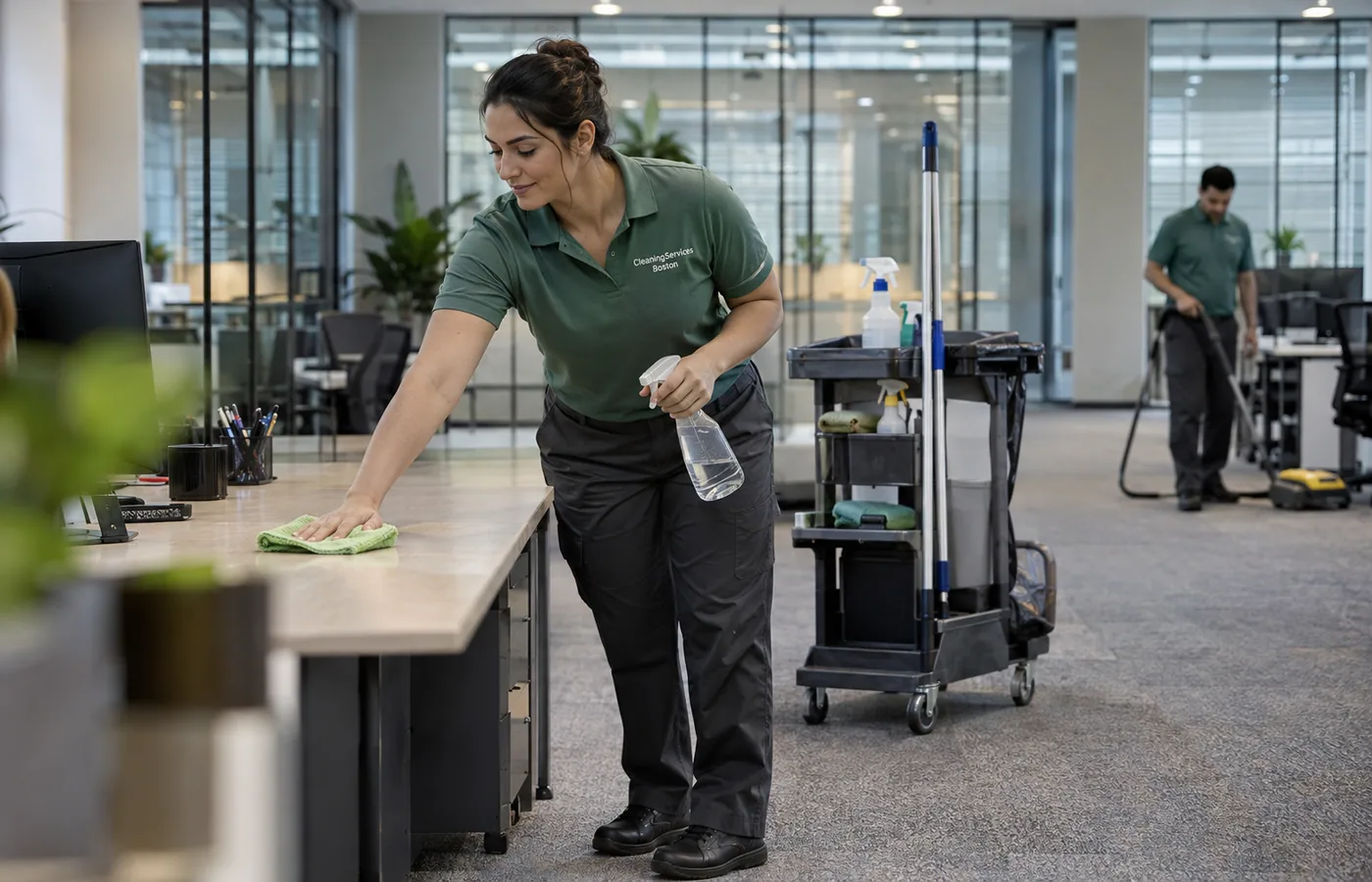
Square footage matters less than traffic. A large, quiet office with a few people can need less cleaning than a small, crowded one. Before picking a frequency, answer these:
The more people, visitors and shared food spaces you have, the more often cleaning has to happen to keep the office from looking worn by the end of the week.
Offices with staff in every day, a steady flow of clients or visitors, several restrooms, or a busy shared kitchen. Restrooms, kitchens, trash and floors are kept up daily.
Mid-sized offices, or hybrid teams with predictable in-office days. Visits are timed after the busiest days so the office is reset when it needs it most.
Small offices with few people and little or no public traffic. One thorough visit covers the whole space, sometimes with light upkeep by staff in between.
A good office scope mixes frequencies. Daily tasks keep the place usable, and periodic tasks stop slow buildup.
| Each visit | Periodically | |
|---|---|---|
| Restrooms | Toilets, sinks, mirrors, floors and touchpoints | Grout, partitions and wall surfaces in detail |
| Kitchen or break room | Counters, sink, table tops and appliance handles | Inside the microwave and the outside of the fridge in detail |
| Work areas | Trash and recycling, clear desk surfaces, door handles and switches | Baseboards, vents, high ledges and chair bases |
| Floors | Vacuuming and mopping of traffic areas | Edges, corners and under furniture that can be moved |
| Glass | Smudges on entry doors and conference room glass | Interior partitions and the inside of reachable windows |
How desks are handled varies. Some offices ask cleaners to wipe only clear desk surfaces and leave papers, screens and personal items alone. Tell us your policy and it goes into the written scope.
A schedule is right when the office looks the same on Thursday afternoon as it does on Monday morning. If it does not, look for these:
The opposite also happens. If a cleaner regularly arrives to an office that is already clean, a less frequent schedule, or a lighter scope on some days, may make more sense.
From December through March, salt and sand come in on every pair of boots. Entry mats, lobby floors and the first stretch of carpet take the brunt of it, and residue builds up fast on hard floors. It often makes sense to add extra floor attention at the entrance during those months, even if the rest of the schedule stays the same.
Older office buildings bring their own detail work, such as radiators, tall window trim and shared stairwells, while newer buildings often have rules about vendor access, loading docks and after-hours entry that need to be settled before the first visit.
Commercial cleaning works best with a written scope and a schedule built around your operating hours. Office cleaning usually happens early in the morning or after the last person leaves, so access matters: keys, fobs and alarm codes are discussed during setup, not figured out on the first night.
Start with your best guess and review after a few weeks. It is easier to adjust a schedule that exists than to plan a perfect one on paper. Our office cleaning page covers the typical scope, and janitorial cleaning suits buildings that need ongoing upkeep of lobbies, stairwells and other common areas. For other kinds of workplaces, start with the commercial cleaning overview.
Frequency is also one of the main things that shapes the price, along with square footage and how much is in each visit. The pricing page explains how commercial quotes are put together.