Recurring building upkeep
A fixed routine for common areas, restrooms, trash and floors in buildings with several tenants or heavy daily use.

Our commercial cleaning services in Boston start with two things written down: what gets cleaned and when. Office managers, practice managers, owners and property managers get a scope built for their space and a schedule that works around the hours the business is open.
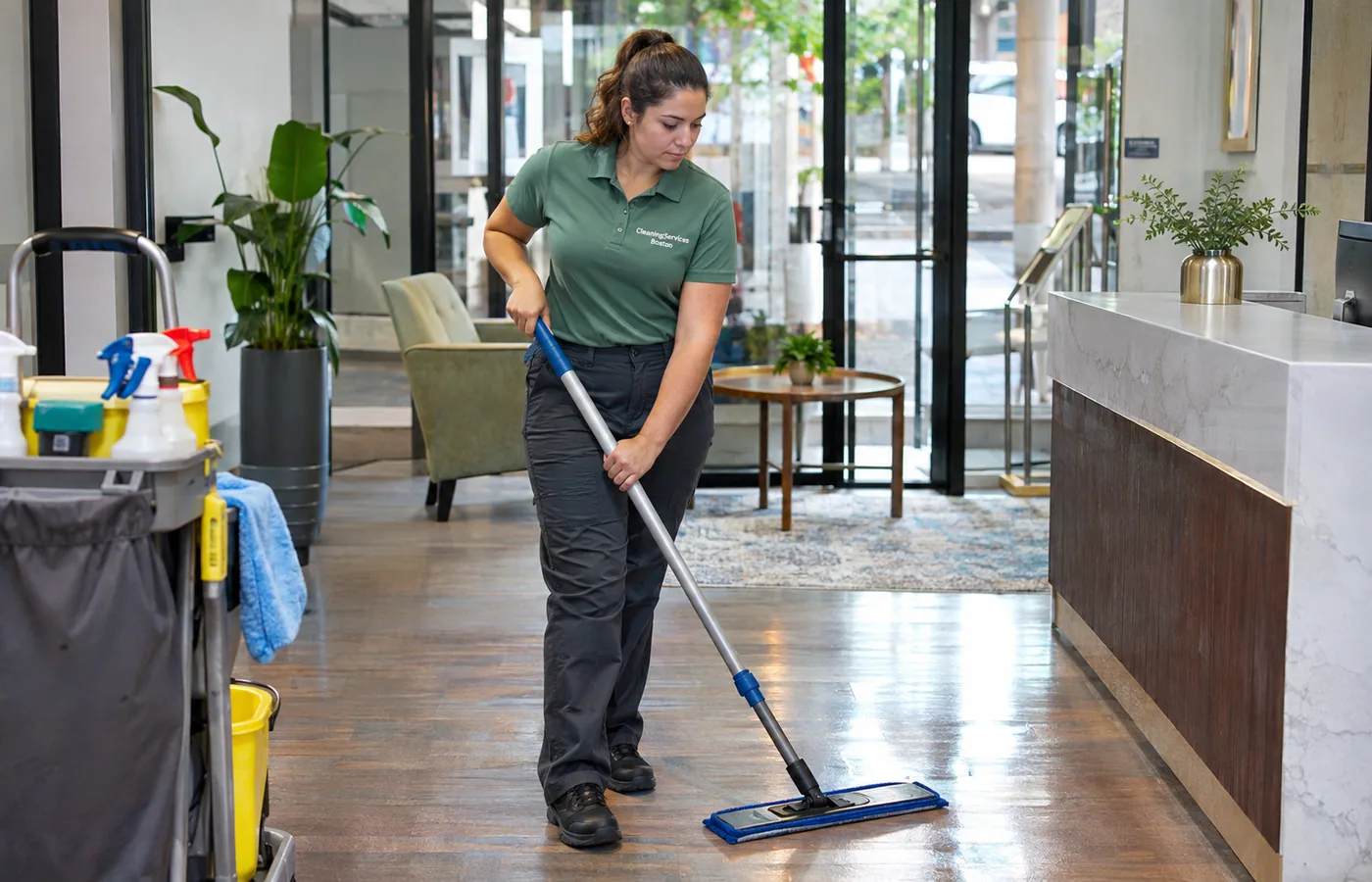
This page is the starting point for any business space: an office suite, a dental practice, a café dining room, a daycare, a fitness studio, a shop floor or the shared areas of a multi-tenant building. The work differs a lot between them, but the setup does not. You tell us what the space is, how it is used and when nobody is in the way. We turn that into a written scope with a frequency for each task, and we quote it. That way you always know what a visit is supposed to include.
Each service has its own page with a detailed scope, typical examples and questions specific to that kind of space.
Scheduled cleaning for businesses, built around a written scope and your operating hours.
Desks, touchpoints, kitchens and restrooms on a daily, weekly or custom schedule.
Ongoing building upkeep: trash, restocking, floors and restrooms on a fixed routine.
After-close cleaning for dining rooms, restrooms and agreed kitchen surfaces.
Waiting rooms, exam rooms and restrooms cleaned to a scope your practice signs off on.
Classrooms, nap rooms and restrooms cleaned when children are not in the building.
Locker rooms, mats, equipment touchpoints and floors for gyms and studios.
Retail, showrooms, banks, worship spaces and other facilities, quoted case by case.
Commercial checklists are organized by how often each task happens, not only by room. Before it is adjusted to your space, a typical scope looks like this.
Exterior windows, pressure washing, carpet shampooing and kitchen hood or duct degreasing are not part of our commercial cleaning. If a request includes them, we point that out before you book so you have time to line up a specialist.
Type of business, approximate square footage, number of restrooms and kitchens, flooring, and when the space is empty. Photos or a floor plan help if the layout is unusual.
We send a written checklist with a frequency for each task, plus a quote. Anything we do not handle is named at this stage instead of being discovered on the first night.
Keys, fobs, alarm codes, security desk sign-in and freight elevator or loading dock rules are discussed at setup. You decide what access to give and who on your side we contact.
The first visit follows the agreed checklist and usually shows which tasks need more time and which can rotate. When hours or teams change, tell us before the next visit and the scope is updated in writing.
The same checklist does not work for a dental office and a boxing gym. Here is how each sector page approaches the work:
A lot of Boston business space sits in buildings that were never designed around cleaning crews. A second-floor office above a shop in an older brick building may have no elevator, so vacuums and supplies go up the stairs by hand. A newer tower in the Seaport may require vendors to check in at a security desk, use the freight elevator and come through the loading dock. Your building may also ask any vendor for a certificate of insurance before it allows after-hours work, so find out what it requires early.
Parking matters too. Downtown, Back Bay and the North End have very little curb space, and snow emergency bans on main roads can change plans overnight in winter. From December through March, salt and sand get carried into lobbies and entries, which is why entry floors and walk-off mats usually get extra attention in a winter scope.
A fixed routine for common areas, restrooms, trash and floors in buildings with several tenants or heavy daily use.
Visits on set days for an office suite or a full floor, with tasks split between every visit and a rotation.
Fine dust removal once contractors have finished and taken their debris away, before staff move back in.
A vacant suite before a new tenant arrives, or a venue the morning after a function.
Commercial quotes are built from the scope, so two spaces of the same size can be priced quite differently. The main factors:
The pricing page explains how quotes are put together for homes and businesses alike.
Ask each one for a written scope with task frequencies, not only a price per visit. A careful company asks about your hours, access, flooring and restrooms before quoting, and tells you upfront what it does not handle. You can also ask any vendor for its insurance documents and look for reviews you can verify independently.
Yes, the schedule is built around your operating hours. Tell us the window when the space is empty, including any days that differ, and we confirm whether our schedule can meet it before you commit.
No. Pressure washing, exterior and high-rise windows, gutters and sidewalk snow clearing are outside what we do. Inside the entrance, glass doors, vestibule floors and mats are part of the regular scope.
Tell us in your request what you prefer, including any products you want used on certain surfaces. The arrangement is confirmed in the written scope before the first visit.
Yes. Each building gets its own scope and schedule, and common areas can be listed separately from tenant suites so it is clear which work belongs to which account. The janitorial services page covers multi-tenant upkeep in more detail.
Yes. Along with Boston, we serve businesses in the cities and towns within about an hour's drive, from Cambridge and Waltham to Woburn and Braintree. The service-area directory shows the status of each municipality. If your site is farther out, send a request and we will tell you plainly whether we can take it on.
Call or email us with the type of space, its rough size, your ZIP code and what you need done. We reply with a free quote, and nothing is booked until you approve it.